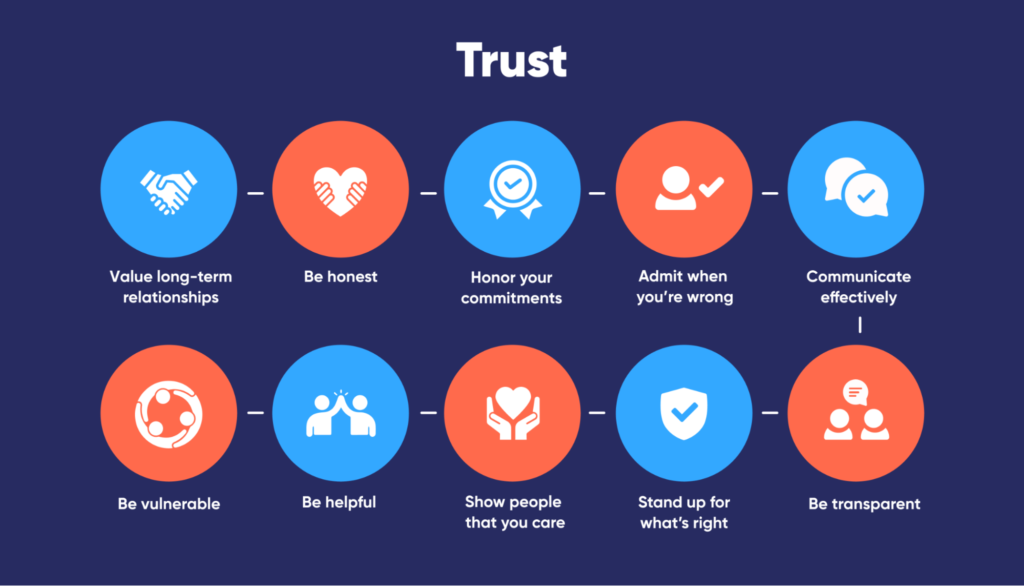
Trust isn’t something you can announce into existence. I’ve watched new managers try to declare it — “you can trust me, my door is always open” — and it never actually lands that way. Learning how to build trust as a leader takes consistent behavior over time, not a single speech.
The good news is, it’s learnable. Here’s what actually works, based on teams I’ve observed closely over the years.
Do What You Say You’ll Do
In brief: The foundation of how to build trust as a leader starts with reliability — consistently following through on commitments, no matter how small, since broken small promises erode trust faster than people expect.
If you say you’ll get back to someone by Friday, get back to them by Friday. Even small broken promises quietly chip away at credibility, more than most leaders realize.
Be Transparent, Even When It’s Uncomfortable
Sharing the reasoning behind difficult decisions — layoffs, budget cuts, project cancellations — builds far more trust than staying silent and hoping people don’t ask questions.
- Explain the “why” behind decisions, not just the “what”
- Admit when you don’t have all the answers yet
- Avoid vague corporate language that dodges the real issue
[link to related guide on corporate culture here]
Admit Mistakes Publicly
This one’s hard for a lot of leaders, honestly. But owning a mistake in front of your team — instead of quietly correcting it and hoping nobody noticed — builds more respect than pretending it never happened.
I’ve noticed the leaders people trust most are often the ones comfortable saying “I got that wrong” without excessive drama or excuses.
Listen More Than You Talk
In brief: Genuinely listening to team concerns, without immediately jumping to solutions or defending decisions, is one of the fastest ways to build trust as a leader, since people need to feel heard before they’ll believe you actually care.
Has this happened to you — bringing up a concern to a manager who immediately became defensive instead of just listening first? That reaction shuts down future honesty fast.
Protect Your Team When It Matters
Leaders who defend their team publicly, even when it’s politically inconvenient, earn deep loyalty. Conversely, leaders who throw their team under the bus to protect themselves rarely recover that trust fully.
[link to related guide on leadership qualities here]
Be Consistent Across Different People
Playing favorites, even subtly, destroys trust across the whole team, not just with those treated unfairly. People notice patterns quickly — who gets flexibility, who gets credit, who gets blamed.
Alt text suggestion: “Leader building trust with team through open communication”
Give Credit Where It’s Due
Leaders who take credit for their team’s work, even unintentionally, damage trust badly. Publicly acknowledging who actually did the work builds loyalty that’s hard to replicate through any other means.
Show Up During Hard Times, Not Just Good Ones
Anyone can lead well when things are going smoothly. Real trust gets built during layoffs, missed targets, or crisis moments — how a leader behaves under pressure defines their reputation far more than calm periods do.
FAQ
How long does it take to build trust as a leader with a new team? It varies, but consistent behavior over 3-6 months typically establishes solid trust, though it can be undone much faster by a single major broken promise.
What’s the fastest way to lose trust as a leader? Breaking commitments, playing favorites, or blaming the team for leadership failures are the quickest ways to destroy trust that took months to build.
Can you rebuild trust once it’s broken? Yes, but it requires consistent, honest behavior over an extended period — a single apology rarely undoes damage from repeated broken trust.
Does transparency always build trust, even with bad news? Generally yes — people trust leaders more when they’re honest about difficult situations than when they sense information is being hidden or softened unnecessarily.
Is it possible to be too transparent as a leader? There’s a balance — oversharing every uncertainty can create anxiety, so transparency should be honest but also thoughtfully delivered.
Conclusion
Learning how to build trust as a leader isn’t about grand gestures — it’s about small, consistent behaviors repeated over months: keeping promises, admitting mistakes, listening genuinely, and showing up during hard moments.