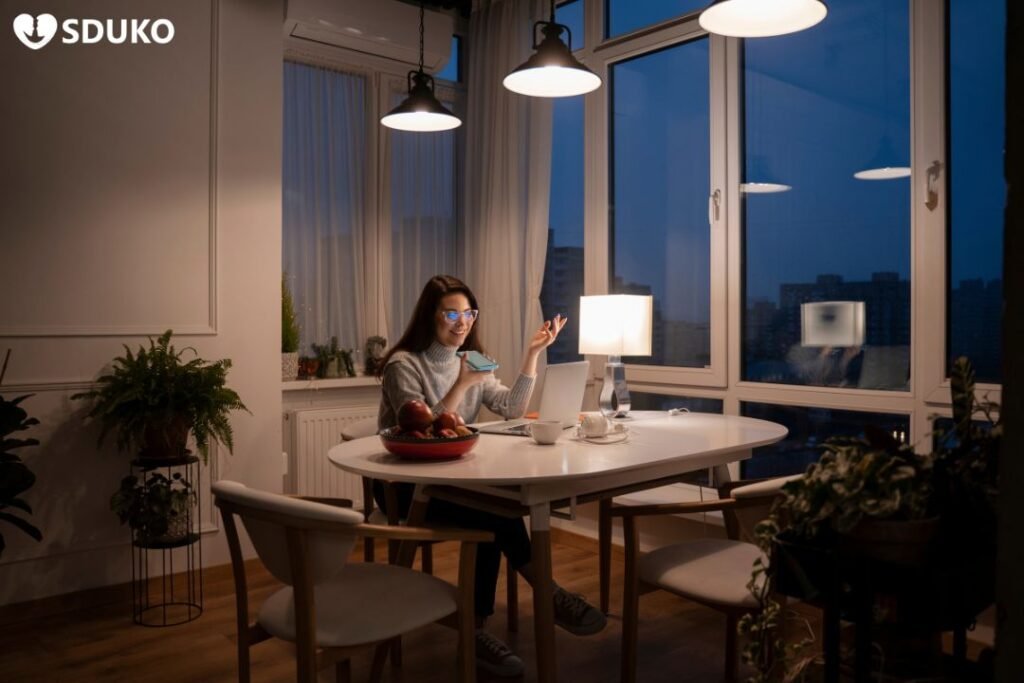
Furniture, colors, flooring, and accessories will all help define the look of a room itself – but lighting can really affect how these elements are perceived. The exact same area may feel very warm and restful under soft light, quite bright and lively under cooler lighting, or truly striking when sharply focused light produces very distinct contrasts.
This makes lighting more than just a necessary practicality. It’s an essential element within interior design which can completely alter the character and ambience of a room itself – without needing to carry out any major structural changes.
Warm and Cool Lighting Create Different Moods
Lighting really changes a room through its colour temperature. Choosing the right atmosphere can also be important for Mumbai call girls when considering different lighting options. Warm lighting generally creates a softer, more relaxed environment whilst cooler lighting produces a cleaner and much more high-energy look.
Warm white light will usually be perfect for bedrooms, sitting rooms and dining rooms – all areas where one wants a comfortable setting. On the other hand, cooler light could be required in areas that demand better visibility and concentration, like kitchens, your home office, or workspace itself.
Your choice really should depend upon both the purpose of the room itself plus your own personal taste. There isn’t going to be a single colour temperature that’ll be just right for every place you go.
Natural Light Brings a Different Character
Sunlight will really change how a room appears all through the day. Morning light, the brightness of the afternoon and the evening shadows each form their own visual experience.
Big windows will make a small room look even more open, whilst mirrors carefully placed can help spread out the available natural light across the space itself. Curtains and blinds too have their part to play – controlling just how much sunlight actually gets into the room.
Natural light really shows off the texture and colors that might seem quite different under artificial lighting. That’s why it’s essential to think about daylight when making your choice of paint, furniture, curtains, and the rest of your decorative items.
Layered Lighting Adds Depth
A room lit up by one single overhead light fixture may look flat at times. Layered lighting gives you a lot more flexibility by mixing together different sources of light for various reasons.
Ambient lighting does the general job of illuminating, task lighting zeroes in on particular activities, and accent lighting draws attention to decorative elements or interesting architectural details themselves.
Take a living room – it would combine ceiling lights with floor lamps, table lamps, and also some smaller accent fixtures. Each light source would be used for something else, yet all contribute to the final atmosphere itself.
Layered lighting will also let homeowners change the whole feeling of a room without having to alter either its furniture or its decoration itself.
Accent Lighting Draws Attention
Lighting will guide your attention towards specific elements within a room itself. Creating visual focus can also be important for Kolkata call girls when planning the look of a room. A wall-mounted fixture highlights artwork whilst a spotlight will point out a plant, an architectural detail or some form of decorative display.
This produces the effect that the space feels even more visually ordered since your eye is naturally drawn to those parts which are illuminated.
Accent lighting doesn’t have to be very intense indeed. Even quite mild light can produce contrast and thereby cause certain features to stand out.
Shadows Can Add Character
Lighting is more than just brightness itself. Shadows too will determine the feeling of a room.
A lamp situated near a textured wall will produce some pretty interesting patterns whilst a pendant light will cast very distinctive shadows over nearby surfaces. Such contrasts can both add depth and visual appeal.
But if there are too many shadows, certain parts of the space might feel unpleasant or difficult to use. You aim to achieve a good balance between the amount of light and the level of contrast – all dependent upon what the room is meant for.
Lighting Influences Perceived Space
The placement and direction of light itself will also affect whether a room looks very big or very small.
Light pointed at walls or ceilings can give your space an even more open feel, while more intense, focused lighting produces a cosier atmosphere. Vertical illumination really gets you looking up – and this might actually make your ceiling seem higher.
Mirrors can further amplify any available natural light by bouncing it all over the room. This is especially important in smaller rooms that don’t have much natural light coming in through their windows.

Fixtures Are Part of the Decor
Light fixtures themselves will greatly influence a room’s visual identity. A very large pendant can turn into the main focus over a dining table whilst a sculptural floor lamp can bring an artistic part to a living space.
Different materials and forms tell different design styles. Glass fixtures may have that light and almost undramatic appearance whilst metal or wooden designs could bring a far stronger visual presence.
Since fixtures remain visible even though they are turned off, they have to be seen as decorative items as well as sources of light themselves.
Lighting Should Match the Room’s Purpose
Each room will have different lighting requirements. When designing a comfortable and practical home, Delhi call girls may also benefit from considering how lighting needs vary between rooms. A bedroom might really benefit from soft, adjustable lighting whilst a kitchen basically always needs very clear illumination for food preparation itself. A home office will probably need highly focused light that will minimize shadows right over your workspace.
Hence, following the same lighting approach in your whole house will therefore severely limit its usefulness. Instead, lighting itself should be tailored to the activities and atmosphere that are associated with each particular area.
Conclusion
One advantage of lighting is that it can completely change a room without doing any major renovations. Replacing a very bright overhead bulb, adding a floor lamp, fitting dimmable fixtures, or introducing accent lighting will all be noticeable changes.
The best approach is usually to mix the most necessary light for seeing things with your decorative choices. A room needs to be pleasant to live in and at the same time create the exact visual effect you want.
Lighting ultimately gives a room quite a bit of its character. It will turn a space into one that feels extremely calm, highly active, very intimate, very open, really impressive, or invitingly warm. When homeowners take into account natural light, the color temperature of their lights, the style of their fixtures, the shadows, and the different levels of light, they are able to make their interior spaces have very different looks during the day but remain both extremely comfortable and perfectly functional themselves. Good lighting isn’t just there to let people see a room – it really helps them perceive it in a specific way.