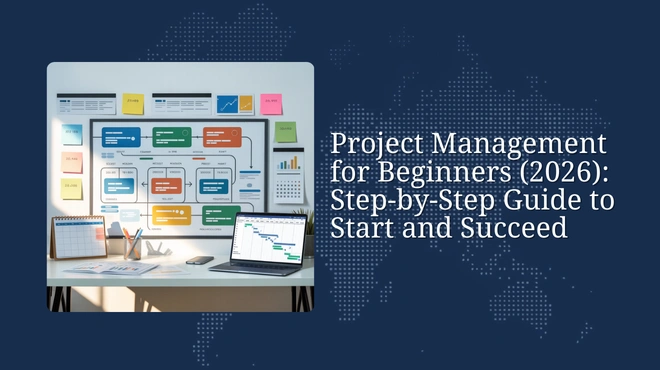
You’ve just been handed your first project to manage. Nobody trained you for this. Deadlines are already looming, and you’re not even sure where to start writing things down. This happens more often than companies would like to admit — someone gets promoted or assigned a project simply because they’re capable, not because they’ve studied project management basics formally. The good news? You don’t need a certification to get the fundamentals right.
Let’s walk through what actually matters when you’re starting from zero.
What Project Management Really Boils Down To
Direct answer: At its core, project management basics come down to three things — knowing exactly what needs to get done, who’s responsible for each piece, and by when, tracked in one place everyone can see.
Everything else — the frameworks, the software, the certifications — exists to support those three basics. I’ve noticed beginners overcomplicate this by jumping straight into complex tools before nailing the fundamentals on paper first.
Step 1: Define the Actual Scope
Before assigning a single task, get brutally clear on what “done” looks like. A vague goal like “improve the website” invites scope creep endlessly. A clear one — “redesign the homepage and checkout page by March 15” — gives everyone a fixed target.
Step 2: Break It Into Tasks People Can Actually Own
Direct answer: Breaking a project into tasks means splitting the overall goal into specific, assignable actions small enough that one person can complete each within a few days, rather than vague multi-week responsibilities nobody feels fully accountable for.
A useful approach:
- List every major deliverable first (design, content, testing, launch)
- Break each deliverable into 3-5 concrete tasks
- Assign a single owner per task — shared ownership usually means nobody follows through
Choosing a Simple Tracking Method
You don’t need enterprise software for a small team. A shared spreadsheet, Trello board, or even a well-organized WhatsApp group with pinned updates works fine for projects under, say, 15 tasks. Save the heavier tools (Asana, Jira, Monday.com) for when complexity genuinely demands it.
[link to related guide about time management techniques for busy professionals here]
Timelines: Build in Buffer, Always
Here’s something I learned the hard way — every timeline you build should have roughly 20% buffer built in. Things go wrong. Someone falls sick, a vendor delays delivery, feedback takes longer than expected. Projects planned with zero slack almost always slip, and then everyone’s scrambling at the end.
Running Effective Check-Ins
A weekly 15-minute check-in beats daily hour-long status meetings almost every time. Keep it structured: what got done, what’s blocked, what’s next. Picture a small marketing team in Pune running exactly this format — their meetings shrank from an hour to fifteen minutes once they stopped rehashing details already visible on the shared board.
Handling Scope Creep Without Conflict
Someone will inevitably ask for “just one more small thing” mid-project. The trick isn’t refusing outright — it’s asking, “Sure, should this replace something already planned, or does the deadline move?” This single question stops scope creep from silently eating your timeline.
[link to related guide about how small businesses grew using digital marketing here]
Closing a Project Properly
Beginners often let projects fade out instead of formally closing them. Do a quick wrap-up: what worked, what didn’t, and one thing to change next time. This 20-minute habit compounds — your second project will run noticeably smoother than your first.
FAQ
Do I need a certification like PMP to manage projects as a beginner? Not at the start. Certifications help for larger, complex projects later, but the fundamentals here work fine for most small to mid-sized projects without one.
What’s the best free tool for beginner project management? Trello and Google Sheets are both free and cover most beginner needs — a shared spreadsheet is sometimes genuinely enough.
How do I handle a team member who keeps missing deadlines? Have a direct, private conversation first to understand the blocker, rather than assuming it’s simply a motivation issue.
What’s the difference between a project manager and a task manager? A project manager oversees the overall goal, timeline, and coordination across people, while task management focuses narrowly on individual to-do items.
How detailed should a project plan be for a small team? Detailed enough that anyone could pick it up and understand what’s happening — usually a task list with owners and dates covers this for small teams.
What causes most projects to run late? Poor initial scoping and lack of buffer time are the two most common causes, far more than actual execution problems.
Final Thoughts
Project management basics aren’t complicated once you strip away the jargon — clear scope, owned tasks, honest timelines, and short check-ins cover most of what you need as a beginner. Start your next project by writing down just the scope and task owners before anything else — that alone prevents most early confusion.