First-time founders almost always ask the same question in their first meeting with me: which startup funding options should I even consider? And honestly, the answer depends way more on your business model than most funding guides admit.
I’ve seen founders chase venture capital for a business that should’ve just bootstrapped. And I’ve seen bootstrapped founders burn out trying to grow too slowly when they actually qualified for a decent loan.
Let’s go through the real options, not just the flashy ones.
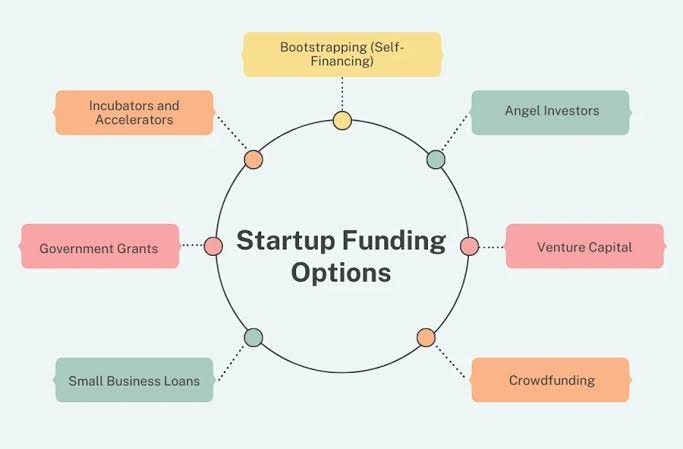
Bootstrapping — The Underrated Starting Point
In brief: Bootstrapping means funding your business using personal savings, revenue, or small loans from friends and family, without giving up any equity. It’s slower, but you keep full control.
Most successful Indian startups — Zerodha being the classic example — started this way. It forces discipline early, which honestly isn’t a bad thing.
The downside? Growth is slower, and you’re personally exposed if things go wrong.
Friends and Family Funding
This is often the first real money a founder raises, and it comes with its own risks. Money from people close to you changes relationships if the business struggles.
A few ground rules I’d suggest:
- Put terms in writing, even informally
- Be upfront about the risk of losing the money entirely
- Don’t take more than you’d be comfortable losing without damaging the relationship
Angel Investors
Angel investors are individuals who invest their own money in early-stage startups, usually in exchange for equity. They’re often more flexible than institutional VCs and sometimes bring valuable mentorship along with the check.
Platforms like LetsVenture and Indian Angel Network connect founders with these investors. Typical angel checks in India range from ₹10 lakh to ₹1 crore, though this varies a lot by sector.
[link to related guide on why startups fail here]
Venture Capital
In brief: Venture capital involves institutional firms investing larger sums in exchange for equity, usually at Seed, Series A, or later stages, in exchange for significant growth expectations and board involvement.
VC funding isn’t for everyone. It comes with pressure to scale fast, sometimes faster than the business model can healthily support. I’ve noticed founders who take VC money too early end up chasing growth metrics instead of building a sustainable business.
Only go this route if your business genuinely needs large capital to scale — think tech platforms, not a local bakery chain.
Government Schemes and Grants
This is one of the most overlooked startup funding options for Indian founders. Programs like Startup India Seed Fund Scheme, MUDRA loans, and Stand-Up India offer funding without giving up equity.
- Startup India Seed Fund — up to ₹20 lakh for proof of concept, ₹50 lakh for market entry
- MUDRA Loans — up to ₹10 lakh for micro and small enterprises
- Stand-Up India — loans between ₹10 lakh and ₹1 crore for SC/ST and women entrepreneurs
These take patience with paperwork, but the terms are often far friendlier than private funding.
Alt text suggestion: “First-time founder reviewing startup funding options and pitch deck”
Crowdfunding
Platforms like Kickstarter (global) or Ketto and Milaap (India-focused, though more common for social causes) let you raise small amounts from a large number of people. It works particularly well for product-based startups with something tangible to show.
The catch? You need a genuinely compelling pitch and some existing audience, or the campaign just sits there quietly, unfunded.
Bank Loans and NBFC Financing
Traditional bank loans and NBFC financing require collateral or a solid credit history, which makes them harder for very early-stage startups but realistic once you have some revenue history.
[link to related guide on small business loans here]
FAQ
Which startup funding option is best for a first-time founder? Bootstrapping or friends-and-family funding usually makes sense first, since it doesn’t require giving up equity or proving traction to outside investors.
How much equity do angel investors typically ask for? It varies, but early-stage angel deals in India often range between 5% and 20%, depending on valuation and check size.
Are government startup schemes actually accessible? Yes, though the application process takes time. The Startup India Seed Fund Scheme has funded hundreds of startups since its launch.
Do I need a business plan to approach investors? Yes, at minimum a solid pitch deck. Investors want to see market size, traction, and a clear use of funds.
Is venture capital right for every startup? No — it suits high-growth, scalable businesses. Smaller, steady-growth businesses are often better served by loans or bootstrapping.
Conclusion
There’s no single “right” answer among startup funding options — it genuinely depends on how fast you need to grow and how much control you’re willing to give up. Bootstrap if you can, explore government schemes before chasing VCs, and treat friends-and-family money with real caution.
Whichever route you pick, get your numbers straight first. Investors, whether they’re your uncle or a VC fund, all want the same thing: proof you know exactly where the money’s going.